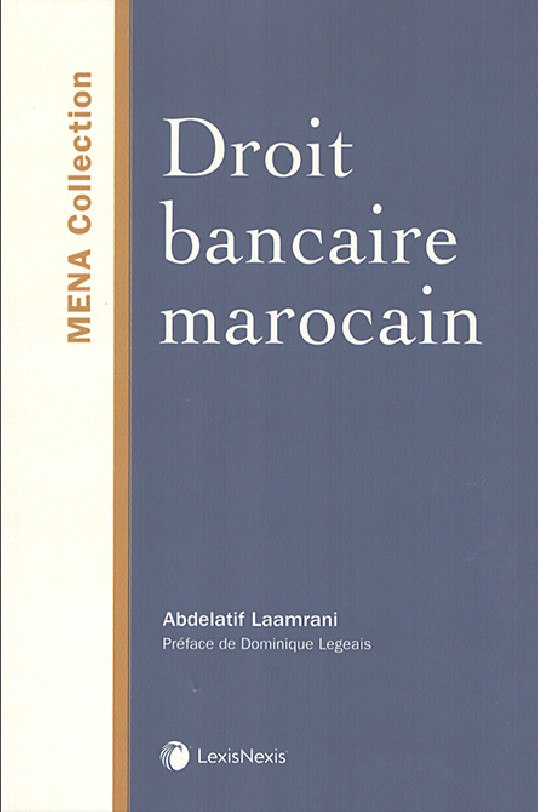
Banking today shapes and influences every aspect of modern life. In Morocco, it is of recent origin, yet the legal mechanisms of banking activity have taken firm hold there; they have been enriched and modernised through dynamic legislation so as to rise to international standards without overlooking national specificities.
This treatise on Moroccan banking law describes the current state of the law and of practice in the banking field. Its ambition is to offer the reader, with a measure of analysis, the fundamental concepts, the historical evolution, the institutional actors, the operators, the consumers and the operating techniques of banking services in today's Morocco.
It is also intended as a working tool, both theoretical and practical, in the hands of researchers, bankers, regulators, investors, academics, lawyers and judges with an interest in banking and financial law. Containing hundreds of recent doctrinal and case-law references, it addresses many of the issues facing banking practice in Morocco today: the adaptation of banking services to consumer-protection obligations, the emergence of new means of payment, the digitalisation of banking, the internationalisation of compliance, and the challenges of banking regulation and supervision.
In Morocco, local administrative organisation is the outcome of a long historical journey and of the joining of traditional institutions with modern ones. The governor is one of the central figures of that organisation. He was, and remains, the King's representative in the prefectures, provinces and regions of the Kingdom; there he must act not only as guarantor of the maintenance of public order but also as coordinator of the field services of the various ministries.
The author sheds light on the genesis and the place of the institution of the governor within the local administrative order. His approach is at once legal, historical, sociological and anthropological.
Foreword — Michel Verpeaux · Introduction — Michel Rousset
Published — December 1, 2016 · 696 pages · 155 × 240 mm
The Legal Characterisation of the Video Game: from Technical Object to Complex Work of the Mind
A comparative approach across Moroccan, French and European law — Doctrinal study, ref. MA2052
Long perceived as a mere object of entertainment, the video game has now established itself as a major cultural, technological and economic industry, alongside cinema, music and the audiovisual sector.
It raises particularly rich legal issues: the characterisation of the work, intellectual property, personal data protection, the protection of minors, the liability of the various actors, content regulation, and the interplay between creation, technology and the market.
Publication available to subscribers of the Lexis MA database (LexisNexis).
February 18 · Legislative News
Hotel Management Agreements: How to Mitigate the Legal Risks?
By Abdelatif Laamrani — Attorney admitted to the Paris, Casablanca and Montreal Bars, founder of the international business law firm Laamrani Law Firm
The hotel management agreement is a major subject in economies that rely on tourism as one of their principal sources of revenue. Such is the case of Morocco, where tourism contributes 7.3% of GDP. The Kingdom is one of the most visited countries in Africa and one of the most sought-after destinations, ranking among the top three together with Egypt and South Africa, and 31st worldwide.
Most often, the hotel management agreement binds the owner of a property and a hotel operator, generally a multinational luxury hotel chain holding an international brand and possessing its own distinctive, specific standards and norms. A word on the origins of this contract: at the international level, this form of agreement did not exist before 1950, and all hotels were run by their owners.
In other words, management was not separated from ownership. In the United States, one of the leading pioneers in hotel management was Hilton Hotels Corporation, founded in 1946 by Conrad Hilton. The first hotel management agreement was that of the "Hong Kong Hilton", in 1963. That contract was a milestone in the international hotel management industry.
The hotel was wholly owned by a Hong Kong company, the Hutchison Whampoa family, which entered into a genuine hotel management agreement with Hilton International. Although it stands as the first international hotel management agreement as we know it today, many of its clauses were based on a lease agreement, similar to the Caribe Hilton contract in San Juan (Puerto Rico), because there had to be a starting point in drafting the new document.
Even today, many of the "standard" management agreements used by international hotel chains contain vestiges of a lease. Ironically, "the Hong Kong Hilton was demolished to make way for an office building in 1995, even though it had generated more than a billion dollars over its 32 years of operation".
In the 1960s and 1970s, after the expansion into international destinations of the pioneering American hotel chains "Hilton Hotels Corporation" and "InterContinental", other American hotel companies decided to enter the international market using the relatively new model of management contracts: Sheraton, Marriott and Hyatt — all of these companies relied primarily on hotel management agreements for their international expansion.
Today, the international hotel management agreement is far more complex than it once was. For tax and other reasons, the basic contract is often split into six or seven different documents. New concepts have been introduced as hotel management companies and owners have become more "sophisticated" and as the market landscape has undergone considerable change, owing to heightened competition, technological progress, shifting legislation, and so on.
Nevertheless, today's international hotel management agreements retain the same spirit, indeed the same general framework, as the original management contract. The growing complexity of these contracts is also due to the fact that:
(i) The parties, whether owners or managers, are generally large, sophisticated institutions that negotiate intensively, and their lenders often join those negotiations to protect their own interests;
(ii) On the international scene, owners are often wealthy families or individuals who focus primarily on purely commercial and financial matters.
As a rule, the hotel management agreement is an unbalanced contract. This is because when its first versions were drafted, they were drawn up by hotel groups that enjoyed great bargaining power. An owner/investor seeking access to luxury hospitality expertise and to the strength of a chain (and of a brand) for marketing purposes had little choice. That is why the first international management contracts provided for high fees and long terms — up to sixty years! — and gave the management company (the operator) extraordinary control over an asset held by another party (the owner).
However, with the strong proliferation of management companies, owners have become far more astute and, with the help of their lawyers, a gradual reversal of that trend has been observed. For example, in the past, an international management company might charge fees equal to 5% of gross revenue and 10% of operating profit (profit before fixed charges).
Today, a more common formula would be "2 and 8", and the "8" is generally calculated using a formula more favourable to the owner than in earlier years. Operating terms are shorter, performance is monitored more closely, owners have more control, and more — indeed considerably more — risk is allocated to the management company.
Even so, notwithstanding the improved terms offered by managers today — unless they provide substantial financial support, which is no longer ruled out in the new structures that international operators put forward to set themselves apart from their competitors — the owner of a managed hotel still bears almost the entire financial risk of the venture. The imbalance persists to the owner's detriment, since the hotel could record an operating loss while the management company would still collect its base fees.
Moreover, even when the hotel generates an operating profit, the owner must still service its debt and pay property taxes and other ownership costs, which may well result in a significant net loss for the owner. In what follows, we shall briefly review, in turn, the most important clauses of a hotel management agreement, before turning to the legal and financial risks they may entail.
The Most Important Clauses
Before listing the decisive clauses of a hotel management agreement, one should consider the legal nature of this contract. As stated above, these agreements bind an owner/investor who holds a property to an upmarket hotel operator (also referred to as a manager). Under this contract, the former places its premises at the disposal of the latter for operation under the operator's brand.
Depending on the circumstances and the legal and financial structures proposed, this type of contract could be characterised as a franchise agreement (franchises of high-end brands are extremely rare: maintaining standards is essential for these operators, and full management produces a far better fee stream), a lease agreement or an agency agreement.
Today, this contract takes the form of a sui generis agreement known as the "hotel management agreement". It may take the form of a single contractual instrument governing every aspect of the business relationship between the owner and the operator, or of a principal contract accompanied by several ancillary contracts each governing one of those aspects separately: a design and concept agreement; an operating agreement; a trademark licence agreement; a technical services agreement, and so forth.
In the latter case, it bears the legal characterisation of a "group of contracts". The principal clauses are: the scope of the operator's duties; the operator's rights and obligations; the recruitment of the hotel's senior staff; the powers of the hotel's general manager; all budget-related matters (preparation of, submission of and disagreement over the budget); insurance coverage; the operator's remuneration; the use of the operator's name and brand; the term of the contract; the termination arrangements and all exit clauses available to the owner and to the operator; the sale and transfer of the hotel; the governing law and the settlement of disputes should a conflict arise; non-compete obligations, and so on.
The Legal and Financial Risks
As mentioned above, in the hotel management agreement the most significant legal and financial risks fall on the owner, in particular the risk of seeing major investments go unrewarded by commensurate operating revenue, or that of the operator's patent underperformance against the projections for the hotel's operation, or again that of a failure in managing the seasonality of the establishment, or its concept, and so forth.
These situations represent so many financial risks of shortfall in operating results that the owner must anticipate in advance in the hotel management agreement, taking care to build in legal remedies capable not only of rebalancing the relationship with the operator, but of sparing the owner from bearing the losses alone: notably the budget-monitoring and budget-objection clause, the clause governing the resolution of underperformance situations, the clause governing forecasts and providing for a benchmark known as the "competitive set" of hotels, termination clauses for the operator's fault in the event of "unremedied" underperformance, the clause setting out the two "GOP" and "RevPAR" tests and, finally, a clear and workable governing-law and dispute-resolution clause.
Naturally, the technicality and complexity of the hotel management agreement make it advisable for the owner always to be assisted by counsel capable of drawing its attention to the risks it could incur upon signing contracts that are often drafted in English and couched in convoluted legal wording, which does not allow their problematic — indeed abusive — character to be detected at first glance.
February 4 · Legislative News
Insurance and Reinsurance: the Sector Put to the Test of Competition Law
Interview with Abdelatif Laamrani — Attorney specialising in insurance and reinsurance law
Mergers, cartels, abuse of dominance… does Law No. 104-12 on competition really apply to Morocco's strategic insurance sector? Maître Abdelatif Laamrani, an attorney specialising in insurance and reinsurance law, takes stock of competition regulation in this sector, in the wake of the 2022 legislative reforms on freedom of prices and competition. This legal professional's insights aim to clarify the legislative and regulatory provisions governing the competitive practices of insurance and reinsurance players in the Kingdom.
Is the insurance and reinsurance sector subject to Law No. 104-12 on freedom of prices and competition?
Yes, insurance and reinsurance companies are subject to Law No. 104-12 on freedom of prices and competition, because they are service providers within the meaning of Article 1 of that law. That article provides that its scope extends to any natural or legal person (including publicly owned entities), whether or not headquartered in Morocco, as soon as its operations or conduct have an effect on competition in the Moroccan market or a substantial part of it.
That said, whether as regards merger control or anticompetitive practices, the insurance and reinsurance sector is not subject only to the requirements of the law on freedom of prices and competition. Owing to concerns specific to this field (relating to the protection of policyholders, prudential safeguards, oversight by the regulatory authority, and so on), it is also subject to more stringent arrangements in this area, which come on top of Articles 11 et seq. of Law No. 104-12.
Thus, Law No. 17-99 establishing the Insurance Code laid down provisions on the control of concentrations involving insurance and reinsurance companies. It should be noted that the reform of Law No. 17-99 establishing the Insurance Code did not alter the provisions on mergers and acquisitions of shareholdings (Art. 144). The only change concerns the transfer of decision-making power in this area from the administration (DAPS) to the Insurance and Social Welfare Supervisory Authority (ACAPS).
Article 230 of Dahir No. 1-14-10 of 4 Joumada I 1435 (March 6, 2014) promulgating Law No. 64-12 establishing the Insurance and Social Welfare Supervisory Authority provides: "Insurance and reinsurance undertakings may carry out merger, demerger or absorption transactions only with the prior approval of the Authority, given after consulting the regulation committee. Any application left unanswered upon expiry of a period of sixty (60) days running from the referral to the Authority shall be deemed accepted by the Authority. Any refusal by the Authority must always state its reasons. The Authority may require the production of any documents needed to assess the transactions referred to in the preceding paragraph."
It is thus worth recalling that the Insurance Code provides that, when granting or refusing a licence, account is taken of its impact on the stability and the competitive conditions of the market.
This licence is also required in the event of a significant change in the characteristics of insurance undertakings, notably in the event of a change of majority ownership, the transfer of more than ten per cent (10%) of the shares, or the taking of direct or indirect control exceeding thirty per cent (30%) of the share capital (Art. 172), and in the event of a merger, demerger or absorption (Art. 230).
The Authority may prohibit acquisitions of shares in, or takeovers of, insurance and reinsurance undertakings where such transactions are deemed contrary to the public interest. By public interest, the Insurance Code means protecting policyholders, subscribers and beneficiaries of contracts (Art. 172).
What is meant by an anticompetitive practice in the insurance and reinsurance sector?
Schematically, market practices are deemed anticompetitive where they have the object or may have the effect of preventing, restricting or distorting competition in a market: concerted actions, agreements, cartels or coalitions, whether express or tacit, in whatever form and for whatever reason, in particular where they tend to:
limit access to the market or the free exercise of competition by other undertakings;
hinder price formation by the free play of the market by artificially encouraging price increases or decreases;
limit or control production, outlets, investment or technical progress;
share out markets, sources of supply or public procurement contracts.
To these situations must be added the abuse of a dominant position and the creation of a situation of economic dependence. Abuse may consist, in particular, of refusal to sell, tied sales or discriminatory conditions of sale, as well as the severance of established commercial relations on the sole ground that the partner refuses to submit to unjustified commercial terms. It may also consist of directly or indirectly imposing a minimum level on the resale price of a product or good, on the price of a service, or on a commercial margin (Articles 6 and 7 of Law No. 104-12).
Prohibited are price offers or consumer sale-price practices that are abusively low in relation to production, processing and marketing costs, where such offers or practices have the object or may have the effect of ultimately driving an undertaking, or one of its products, out of a market, or of preventing it from entering a market (Article 8).
Can you give us specific examples of practices that could be characterised as anticompetitive in this sector?
One can envisage the situation where insurers collude with one another to distort competition by insuring risks that are excessively loss-making or even uninsurable. Such collusion may also arise from biased pricing, given that the components of the insurance premium are not all objective elements.
In the reinsurance sector, the situation is indeed problematic, and certain forms of conduct may at times even resemble anticompetitive practices. Such is the case of agreements among domestic ceding companies to avoid ceding risks to foreign reinsurers, with a view to ceding everything to a domestic reinsurer, regardless of its rating, its financial strength or its specialisation.
Likewise, in the same field, the historic national reinsurer — which long benefited from what was known as the legal cession, a subsidy paid to it by all the insurance companies in the market since 1960, but which has been dismantled — must today fight on equal terms, and without favouritism, in a market where almost all insurance companies have set up their own captive reinsurers.
Compliance with the principles of fair competition and freedom of prices in the insurance and reinsurance market is ensured under the watchful eye of the sector's watchdog, ACAPS, and of the Competition Council, referral to which has been greatly simplified.
Interview conducted by Bilal Cherraji — Les Inspirations ÉCO
Financial Conglomerates: the Supervision Challenge
"A conglomerate is a group made up of two or more undertakings with different activities. In general, it comprises a parent company and several subsidiaries. Multi-sector conglomerates are often large multinationals. A financial conglomerate is defined as one providing products or services in different sectors of the financial markets: the banking sector, the insurance sector and the investment-firm sector."
Maroc Hebdo · June 12, 2020, No. 1352
Risk, the Antidote to Fear!
A society that refuses risk turns its back on life and carries within it the seed of fear and of ruin.
Finances News Hebdo · June 3, 2020
Business Interruption Insurance vs. Shutdown of Activity: Practical Legal Solutions for Business Leaders
Businesses in the hotel, tourism, restaurant, tea-room and sporting and cultural events sectors were hit head-on by the compulsory shutdown of activity imposed by the State under the health state of emergency. Their revenue losses are substantial, and the risk of receivership or even winding-up is becoming ever more real. It thus appears urgent, indeed vital, for business leaders to turn to their insurers to see to what extent they could invoke their Business Interruption insurance.
Interview
The Legislature Introduced a Major Reform by Establishing the Early Diagnosis of Business Difficulties
In concrete terms, the new text brought two major reforms: the extension of the special administrator's scope of intervention and the autonomy conferred on the business owner in safeguard proceedings.
Analysis
The Ghosn Affair, as Seen by Maître Abdelatif Laamrani
The arrest, on November 19, 2018, of the head of the Renault-Nissan-Mitsubishi Alliance as he stepped off his private jet at Tokyo airport, before the eyes of the cameras, hit like a bombshell — not only in the industrial microcosm, but throughout financial and economic circles and in every chancellery.
Legal Scholarship
The Legal Nature of the Reinsurance Treaty
Reinsurance is a highly specific economic activity that involves taking on part of the risks exceeding insurers' retention capacity, thereby enabling them to improve their technical results. Most legal systems do not include reinsurance in their insurance codes: the result is a legal vacuum that raises problems when a dispute arises between ceding companies and reinsurers.
Legal Scholarship
Legal Solutions for Operating Port Infrastructure in Morocco
A port is not merely an infrastructure located on the sea coast intended to accommodate boats and ships, linking a point on land to other lands across the sea: it is at times even a founding element of civilisations and a necessary prerequisite for the economic power of nations bordered by the sea.
Legal Scholarship
Public-Private Partnerships in Morocco: What Future?
The ambition of this contribution is not to lift the veil entirely on the subject of public-private partnerships. The PPP is currently the object of marked interest in Europe; it is even a "fashionable" topic of study, since scarcely a month goes by without a conference or seminar addressing the subject.
Legal Scholarship
The Reform of Insolvency Proceedings for Businesses in Difficulty in Morocco
The practical questions that entrepreneurs and investors have been asking of late about the reform of Book V of the Commercial Code, on the treatment of businesses in difficulty, essentially concern a number of day-to-day management issues linked to the onset of financial and cash-flow difficulties.
Legal Scholarship
The Legal Treatment of Sovereign Default
What is sovereign default? In other words, when can one speak of a situation of default by a borrower State? After this attempt at a definition, we shall try to identify a "hypothetical" legal regime that should govern the "insolvency" of States, and then put forward some solutions that could be recommended to the governments of States facing a situation of sovereign default.
Study
The Distribution of Property Insurance Products in Morocco through Bank Branches
A study of the legal implications of marketing property insurance products through bank branches via a "captive" brokerage firm, with the credit institution acting as subscriber on behalf of others.
Regulatory Watch
Public Procurement — Order of the Minister of Equipment and Water No. 2399-22
Order of 10 Safar 1444 (September 7, 2022) setting the number of categories of building and public works companies corresponding to each sector of activity, the classification thresholds within each category, and the maximum annual amount of a contract for which a company in a given category may be admitted to tender.
Regulatory Watch
Circular Note No. 733 — Tax Provisions of Finance Law No. 50-22 (2023)
The circular note sets out the tax provisions of Finance Law No. 50-22 for the 2023 budget year, detailing and clarifying the general rules with the help of illustrative examples.
Newsletter · March 2023
Newsletter No. 1 — Banking and Financial Law
First issue of the firm's legal newsletter, addressed to its clients in the banking and financial sector: a regulatory review of the key texts adopted in Morocco — including the circulars of the Wali of Bank Al-Maghrib implementing the new microfinance law —, payment aggregators in the light of the European PSD2 directive, Supply Chain Finance (reverse factoring), the book Droit bancaire marocain (LexisNexis, MENA Collection), and a selection of articles and interviews.
Second edition of the firm's newsletter: the record criminal settlement reached in Belgium concerning the banking monopoly and its lessons for third-country banks operating in Europe (CRD VI directive); Morocco's two summer reforms — Law No. 58.25 enacting the new Code of Civil Procedure, examined from the standpoint of bank debt recovery, and Law No. 66.23 overhauling the legal profession; the birth of the secondary market in non-performing loans; progress on the crypto-asset framework; fintech law, the legal characterisation of the video game, and life at the firm.
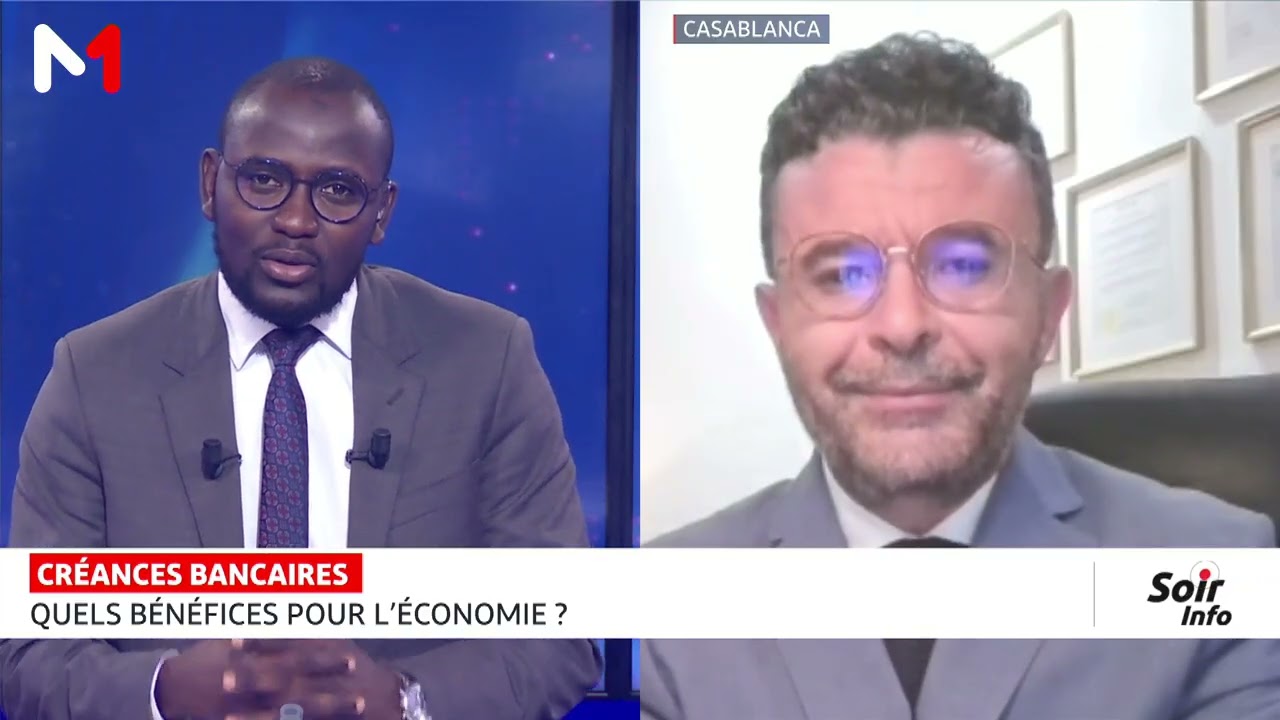
Maître Abdelatif Laamrani appears regularly in the business and legal press — Les Inspirations ÉCO, Maroc Hebdo, Finances News Hebdo — as well as in broadcasts and conferences devoted to banking law, insurance and reinsurance law and business law.
Medi1TV Afrique — "Non-performing loans: what is at stake for Morocco?" The insight of Maître Abdelatif Laamrani: Moroccan banks' non-performing loans and the debt-purchase market. Watch on YouTube
Interview
Interview with Abdelatif Laamrani, Attorney admitted to the Casablanca, Paris and Montreal Bars, Founder of Laamrani Law Firm
At the Paris courthouseMaître Laamrani in his lawyer's robe, before the fleur-de-lis standard of the French monarchy.
You founded Laamrani Law Firm in 2012. What was your path up to that point?
I have had several past lives, so to speak. To keep to the essentials, I was successively a banker, an insurance professional and general counsel of several large multinationals and of national and international holding companies, before setting up my own practice as a lawyer, first in Casablanca and then in Paris and Montreal.
I was born in Auxerre, France. I grew up in Meknes, Morocco, where I obtained a bachelor's degree in private law from the Faculty of Law that had just opened its doors there. I then obtained a postgraduate degree (DESS) in insurance law from Hassan II University in Casablanca. Alongside those studies, I worked as a claims adjuster for insurance companies.
I then flew off to Canada, where I obtained a master's degree in international business law from the Université de Montréal and an insurance brokerage licence from Quebec's financial markets regulator, the Autorité des marchés financiers (AMF), and practised as an insurance broker.
After that experience in the insurance sector, I discovered the world of banking, joining Canada's first bank, BMO (Bank of Montreal), as director of banking and financial services and then as director in charge of mortgage lending.
In 2007, I made my way back to Morocco. I worked as general counsel for a real-estate development group, then for the royal holding company, and finally as general counsel in the transport and Green Business sectors.
In 2010, I enrolled at Université Paris 1 Panthéon-Sorbonne, at ISCAE in Casablanca and at ESSEC in Paris. I earned a doctorate in public law from the Sorbonne (in 2015), a master's degree in city and regional management from ISCAE (in 2012) and a master's degree in public management from ESSEC (in 2013).
As for practising as a lawyer, although I had obtained my first certificate of aptitude for the legal profession (CAPA) in 1998, not being one to take the easy road, I did not go into practice straight away. But it was only a postponement: in 2012 I once again passed the bar admission examination, obtained the CAPA and enrolled as a trainee. Once officially entered on the roll of the Casablanca Bar, I flew to Paris, where I prepared for the French bar admission examination, which I passed on April 18, 2018 — which happens to be my birthday! I did not stop there: I returned to Montreal, where I passed the equivalence examination and took the oath as a member of the Quebec Bar in November of that same year.
"In Morocco, although our practice is largely multidisciplinary, our firm's DNA reflects a natural tendency to specialise in banking and financial law as well as in insurance and reinsurance law."
What is the story of your firm, and what areas of expertise does it offer?
It is the story of a dream come true. An ever-clearer vision that I brought to life, tirelessly and step by step. From a general-practice law firm with a small client base to an international business law firm with three offices on three continents and significant partnerships with leading firms in Africa and the Middle East.
We are now organised into three departments: Litigation/ADR, Consulting and Contracts, and Lobbying. We represent international financial institutions such as the World Bank, the IFC, the OECD and the EBRD. In Morocco, although our practice is largely multidisciplinary, our firm's DNA reflects a natural tendency to specialise in banking and financial law as well as in insurance and reinsurance law.
At the national level, we represent the interests of major mining and industrial firms, franchises, banks and insurance and reinsurance companies, among others. Our lawyers advise and assist clients in M&A and corporate restructuring, infrastructure finance and PPPs, port and maritime law, and more. And we have conducted several arbitration proceedings, either as sole arbitrator or as a member of an arbitral tribunal, in fields as varied as public procurement and infrastructure management.
What are your development prospects?
In order to offer the legal services best suited to our international clients, we are now at an advanced stage of talks to conclude an alliance with a North American firm that is a world leader in the international business law market.
We will increasingly position ourselves on matters involving the advice and support of public-sector borrowers in international financing transactions and, where applicable, in their restructuring.
You are admitted to practise before three Bars, in Morocco, France and Canada. What does this "triple hat" bring you?
Indeed, it is the crowning achievement of an entire journey, as I recalled above, although I am not fond of that expression. So let us say it is the outcome of an unusual journey, one not yet complete. This triple admission today reflects our ability to assist our international clients in a world that no longer knows borders. We serve them first and foremost through our command of the two great legal traditions — the French civil-law tradition and the Anglo-Saxon common law. But also through the adaptability, open-mindedness and empathy that such multiculturalism brings.
You are the author of a treatise, Droit bancaire marocain (Moroccan banking law), published by LexisNexis in January 2023. Could you outline the book for us? What readership is it aimed at?
In this ground-breaking book, I sought to present to readers — whether banking professionals, regulators, judges, lawyers, students or teachers — the banking law of Morocco in a very concise manner. The fact that it is up to date with the latest banking reforms (crowdfunding, participatory banking, crypto-assets, electronic/digital means of payment, and so on) positions it today as a unique reference manual for all banking practitioners and consumers in our country.
In it I covered credit institutions, assimilated bodies, finance companies and payment institutions, while scrutinising the conditions for carrying on the business of banking, from obtaining a licence from Bank Al-Maghrib to the operating, supervisory and regulatory requirements applicable to those institutions. I also examined the other regulatory, coordination and consultation bodies, such as the professional associations, notably the GPBM, the APSF, the APEP, and others. I devoted a substantial section to the Central Bank — its history, its role, its functioning and its current powers.
In studying the legal mechanisms of banking operations, emphasis was placed on all the services that banks can provide to their customers: the opening and operation of accounts, the granting of credit, and means of payment. The legislation and the entire body of regulation governing these three spheres were combed through in order to bring out the elements of the contracts, the rights and obligations of the parties, and the banker's duties in connection with his banking liability, where applicable. For credit, a varied typology of loans was studied. As for means of payment, all of them were reviewed: bank cards, transfers, cheques, electronic money, with emphasis on the emergence of new modes of payment such as crypto-assets or, today, central bank digital currencies (CBDCs).
Finally, breaking new ground compared with traditional banking-law manuals, the analysis was extended to sovereign borrowing, which we treated as a "sovereign" international banking transaction, as against "private" international banking transactions such as pre-financing, international factoring, documentary credit and autonomous guarantees.
With regard to sovereign credit, we defined it and reviewed its actors: the lenders (the World Bank, the IMF) as well as all the regional donors, and so on. We then set out the essential conditions and clauses of sovereign loan agreements and, in a second part, addressed the issue of sovereign default and considered some possible solutions.
How much of your time do you devote to writing?
The writing of Droit bancaire marocain was the fruit of the conjunction of two constraints that I turned into an opportunity: I had to teach the banking and financial law course to students of the master's programme in business law at the Casablanca Faculty of Law; the discipline had to be theorised in the form of a teaching module, bringing together the traditional themes of banking law through the eyes of the practitioner that I am. Then the actual writing took place during the long months of lockdown…
Ordinarily, though, I try to make myself write a few pages every day. It must be said that most of my legal publications have been inspired by questions that were either topical or put to me by my clients. And since I have always loved the exercise of the old-fashioned legal essay, this lends these writings a simple, readable and engaging style. For everything written is, by definition, timeless: it will follow us, whatever its quality. Is it not said that the written word remains while the spoken word flies away?
“The finest successes are those we owe to no one but ourselves. There are shameful victories, and ‘glorious’ defeats, that leave their mark on people's minds and enter history.”
Noureddine El Abbassi (Noré), Moroccan journalist, 1980-2017
These are the opening words of the portrait that the late Noré devoted, around 2016, to Maître Abdelatif Laamrani: a working-class childhood between Auxerre and Meknès, a mother devoted to reading, the idols of the Bar — Vergès, Isorni —, the Canadian years, then the return to the robe, “to step into the arena”. A literary, brotherly piece, reproduced here in tribute to its author (in French).
Attorney admitted to the Casablanca, Paris and Montreal Bars. Doctor of Law, Université Paris 1 Panthéon-Sorbonne. Author of Droit bancaire marocain (LexisNexis) and Le rôle du gouverneur au Maroc (L'Harmattan).